The short answer
A flexi print is a 3D printed toy made of many small, rigid segments that are linked together as they print. The printer melts PLA plastic and builds the toy one thin layer at a time, leaving a tiny gap at every joint so the segments don't fuse. It comes off the printer in one piece, already assembled, and it bends because of its joints, not because the plastic is soft.
1. The design
Every flexi starts as a 3D model made by a designer. The designs we sell were shared on Printables under licenses that allow selling prints, and we credit each designer on the product page. The designer splits the animal into segments (the links of a tail, the plates of a body) and shapes each joint so it can't pull apart: a pin with a wider head, a hook through a loop, or a ball in a socket.
Between parts that touch, the designer leaves a small clearance, often well under a millimeter. Most flexi designs are also made to lie flat on the printer bed, which is why many of them look like a row of linked plates.
2. Printing, one layer at a time
A home-style 3D printer (an FDM printer) pushes PLA filament through a hot nozzle and draws the shape one thin layer at a time, starting at the bottom. Each new layer sticks to the one below it. Where the designer left a gap, there's no plastic, so the two sides of a joint cool as separate parts. That's what "print-in-place" means: the parts are printed already linked, with no assembly afterwards.
Because the toy is built in layers, you can see and feel fine lines across its surface. Those layer lines are normal for this kind of printing.
3. Why PLA
We print in PLA, a common 3D printing plastic. It prints sharp details and holds its shape well, and it's stiff, which is what lets thin joints work smoothly. Flexi toys aren't made from flexible filament. The wiggle comes from the joints.
The trade-off: PLA softens around 55 °C (130 °F), so keep flexi toys out of hot cars, dishwashers and direct summer sun. Read Is PLA safe? for care tips.
4. Freeing the joints and checking
Straight off the printer, the joints can be a little stiff, because thin strands of plastic can bridge a gap. Bending each joint gently a few times breaks those strands and frees it up. We check every print before it ships: we clean off any supports and test the moving parts.
Flexi prints in our shop
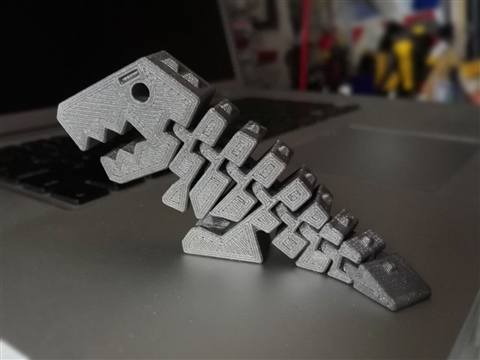
Flexi Rex
The classic print-in-place T. rex with stronger links. It comes off the printer already wiggly, no assembly.
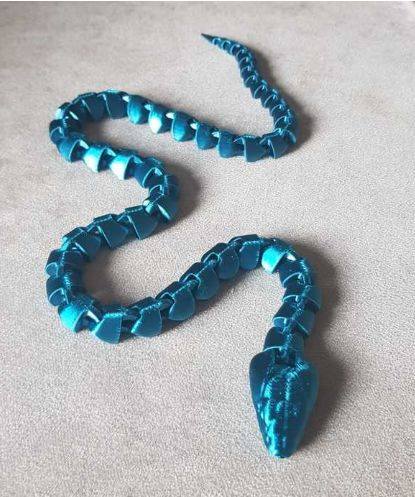
Articulated Snake
A long, smooth jointed snake that slithers when you move it. Printed in one piece.
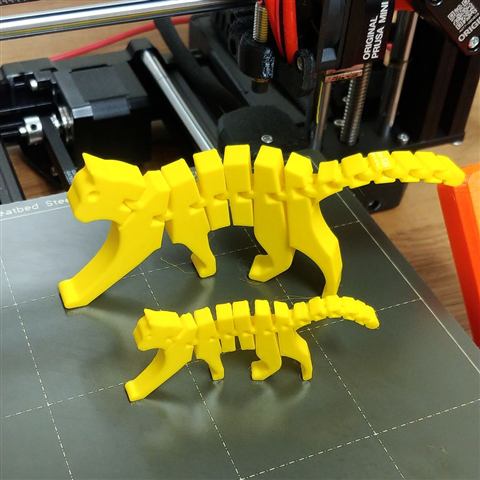
Flexi Cat
A walking cat with a bendy jointed spine and a long chain-link tail. Pose it prowling on your shelf or perched on your monitor.
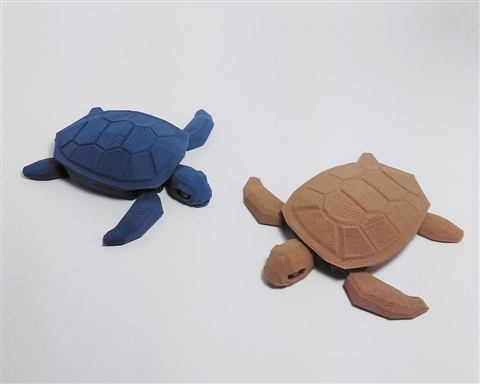
Sea Turtle Flexi
A low-poly sea turtle whose head and flippers flap and wiggle. It prints in one piece and fits in your hand.
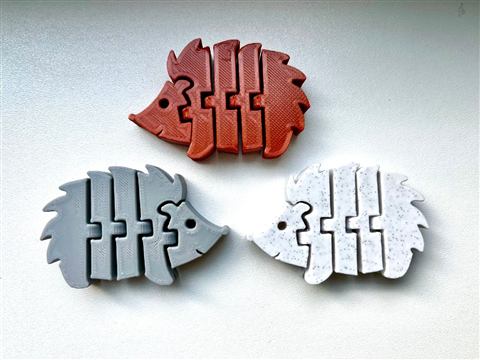
Flexi Hedgehog
A happy little hedgehog with chunky jointed body segments that wiggle and bend. Fits right in your hand and has a hole for a keyring.
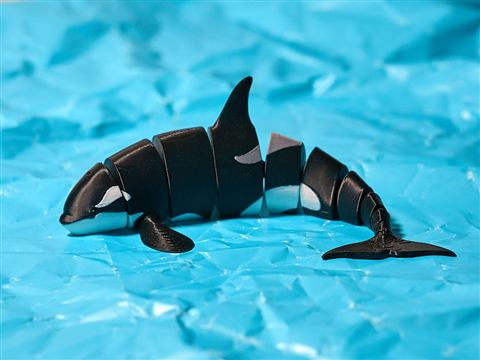
Articulated Orca
A killer whale with a segmented body that swishes side to side, plus moving flippers and tail. It prints in one piece with every joint already working.
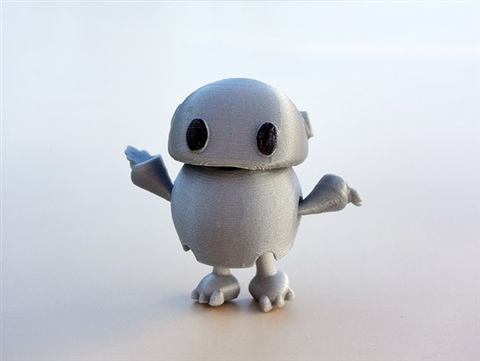
Mini Articulated Robot
A tiny round robot that prints in one piece with arms, legs and head that really move. Pose it waving, sitting or crouching on your desk.
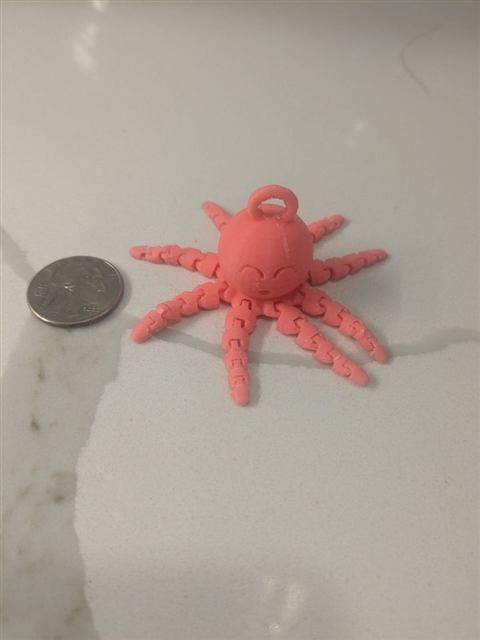
Baby Octopus Charm
A tiny smiling octopus with eight wiggly jointed legs. Hang it on a backpack zipper or your keys.


Quick questions
- Can a flexi break? Yes, if a joint is forced past where it stops or a thin part like a tail tip gets bent hard. Move it the way the joints are meant to move.
- Is it one piece? Print-in-place flexis are. Some articulated toys, like a few spiders and figures, are small kits that snap together instead; the product page says so.
- Who is it for? For ages 13 and up. Contains small parts: not for children under 3.
See one move
Every flexi has a 3D model you can turn in red, black, blue or green.